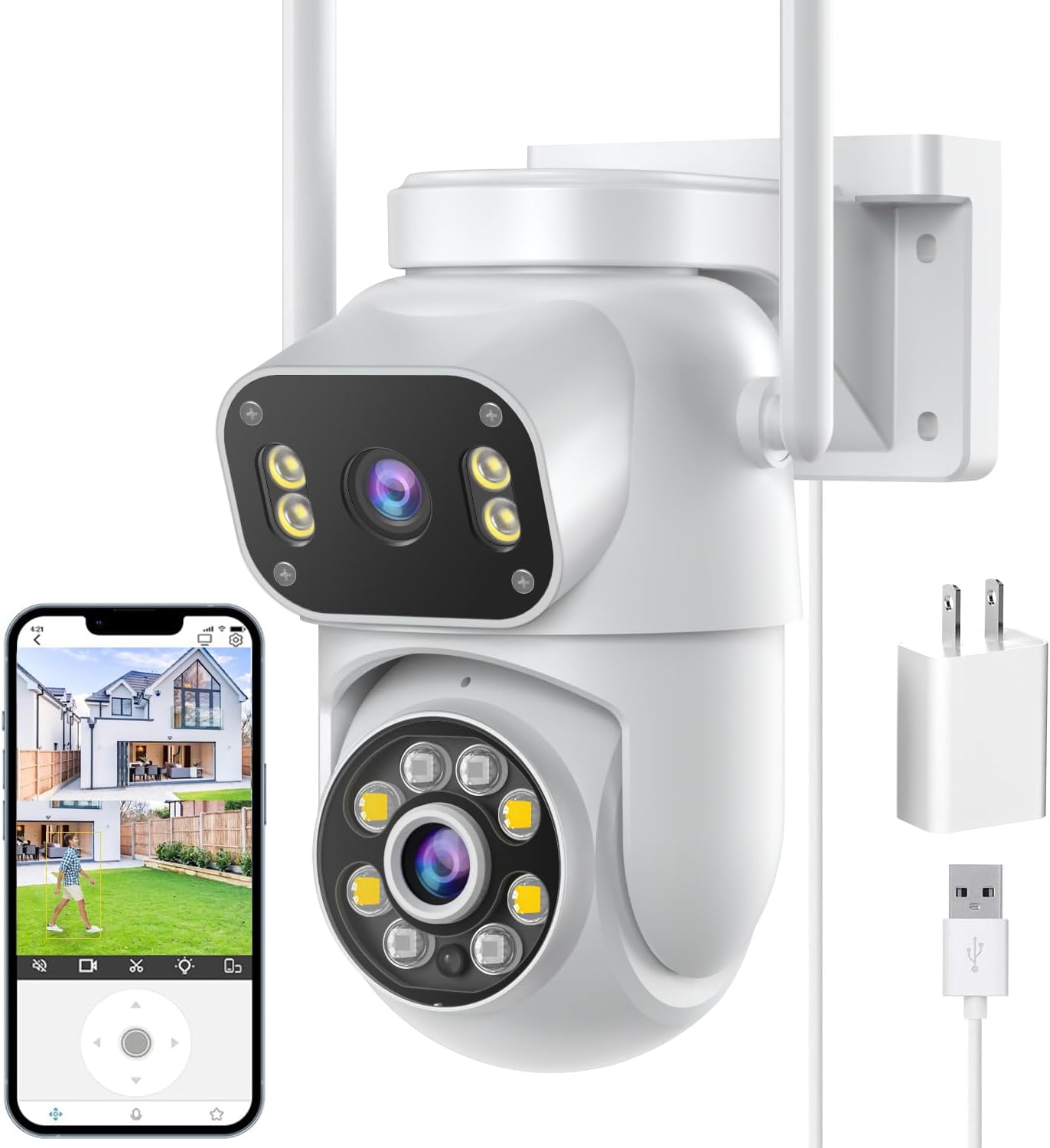
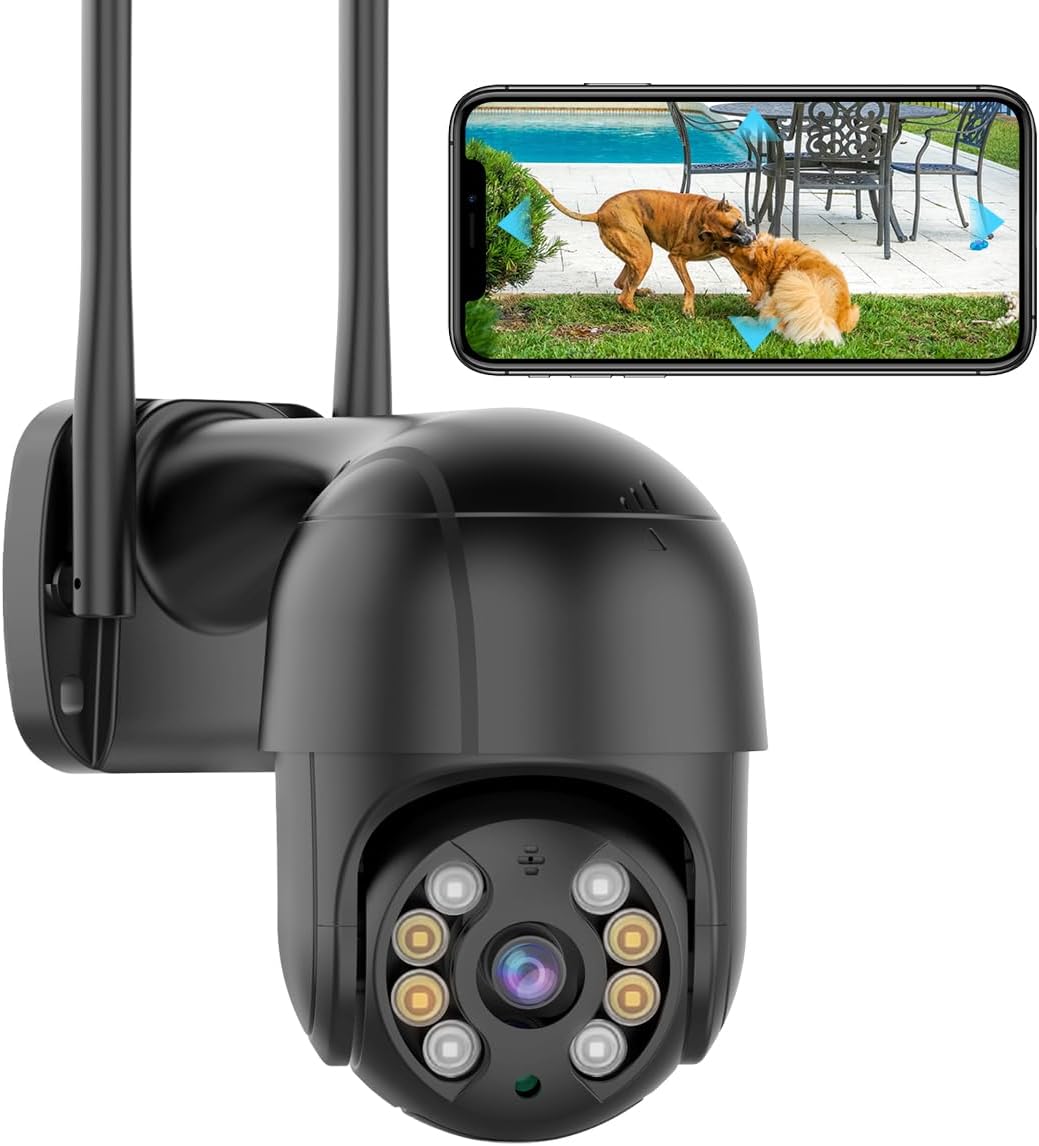
- 1080p (2MP) · 1 lens
- Pan & tilt from the app
- Runs on the iCSee app
Cameras from many makers that all answer to the iCSee app. Start with a pan-tilt dome for the yard, a dual-lens tracker for a wide driveway, or a 3-lens zoom for the far gate.
Ranked by last month's sales · reviewed September 2026
100% compatible: this camera is built to run on iCSee
An iCSee security camera is any camera built to run on the iCSee app, whatever name is printed on the box. BESDERSEC, SDTNOVA, GESKS, Anssipo and HIKJBSET all make them, and once paired, each one sits in the same device list on your phone.
The app comes from Xiongmai's camera platform, the same one behind XMEye, which is why several models name both apps. Pair a pan-tilt dome for the yard, a PoE bullet for the garage and a bulb camera for the hallway, and all three answer to one login.
The three cameras at the top cover the three jobs most homes start with. The BESDERSEC A6 is a 1080p pan-tilt dome that turns 355° and tilts 90°, with an IP66 case, a 5dBi antenna and ONVIF support for Blue Iris, ZoneMinder and most ONVIF recorders. It has no web interface, so plan on the app or a recorder.
The SDTNOVA dual-lens pairs a fixed 3MP lens with a 3MP pan-tilt lens. Its fixed view keeps the whole yard in frame while the lower lens follows a person; tap a point on the upper image and the moving lens swings there. It is also one of the few in the range that joins 5GHz Wi-Fi.
The Anssipo 3-lens puts a 100° wide lens above a two-lens pan-tilt head with 4.3x optical and 8x hybrid zoom. That reach is for a gate or a parked car at the bottom of a long drive, and a 32GB card comes in the box.
Why it covers you: The most bought iCSee pan-tilt: it pans 355° from the app, talks both ways and works with ONVIF recorders.
Three questions settle which iCSee camera belongs on a spot: where it watches, how it gets power and how much one camera has to see. Answer them in that order, because each answer narrows the next.
Outside, you want an IP66 or IP67 rating, a mount that sheds rain, and night vision that reaches the far edge of the scene. Inside a nursery or living room, weatherproofing matters less than a quiet head and a way to talk back. A ceiling light socket is its own case: the bulb camera draws power from the fitting and needs no bracket.
A single lens on a pan-tilt head covers one area and turns to follow movement. Two lenses give a fixed wide view and a tracking close-up at the same time, so nothing leaves the frame while the camera turns. Three lenses, or optical zoom, reach a gate or a car at the far end of a drive.
Indoors, the 1080p PTZ baby monitor adds something no outdoor model has: a 2.8-inch screen and a call button, so a child or grandparent in the room can start a video call to your phone.
BESDERSEC A6 1080p Pan-Tilt Camera |
SDTNOVA Dual-Lens Linkage PTZ Camera |
Siosaxdot Q6 Dual-Lens PTZ Camera |
Anssipo 3-Lens 8x Hybrid Zoom PTZ Camera |
GESKS Single-Lens PTZ Camera |
GESKS 6MP Dual-Lens PTZ Camera | |
| Type | Pan-tilt camera | Multi-lens camera | Multi-lens camera | Multi-lens camera | Pan-tilt camera | Multi-lens camera |
| Resolution | 1080p (2MP) | 6MP (3MP + 3MP) | 1080p (2MP) | 3MP | 8MP 4K | 6MP (3MP + 3MP) |
| Lenses | 1 lens | 2 lenses | 2 lenses | 3 lenses | 1 lens | 2 lenses |
| Pan & tilt | Yes | Yes | Yes | Yes | Yes | Yes |
| Power | Plug-in adapter | Plug-in adapter | Plug-in adapter | Plug-in adapter | Plug-in adapter | Plug-in adapter |
| Wi-Fi | 2.4GHz | 2.4 + 5GHz | 2.4GHz | 2.4GHz | 2.4GHz | 2.4GHz |
| Ethernet port | — | — | — | — | Yes | Yes |
| Zoom | — | — | — | 8x hybrid | — | — |
| See this camera | See this camera | See this camera | See this camera | See this camera | See this camera |
Two cameras marked 8MP can deliver very different pictures. On most multi-lens iCSee models the figure is a sum: two 4MP lenses make 8MP, two 3MP lenses make 6MP, and each view is only as sharp as its own sensor. When an iCSee camera review praises an 8MP picture, check which lens it means.
| Figure on the box | What each lens records | Example |
|---|---|---|
| 4MP dual-lens | 2MP + 2MP | 4MP dual-lens pan-tilt |
| 6MP dual-lens | 3MP + 3MP | SDTNOVA, GESKS 6MP |
| 8MP dual-lens | 4MP + 4MP | 180° panoramic, solar, police-light PTZ |
| 8MP single lens | 8MP (4K) | GESKS single-lens PTZ |
| Three-lens, three screens | 1MP each | Three-lens three-screen PTZ |
Zoom needs the same care. Optical zoom moves glass and keeps detail as it closes in; digital zoom enlarges pixels the sensor already captured. Hybrid zoom combines the two, which is how the Anssipo reaches 8x with 4.3x of it optical.
Two more lines decide how the camera lives on your network. A LAN port lets you run a cable when Wi-Fi is weak; the GESKS pan-tilt models, the three-lens three-screen PTZ and the 10x dual-lens all have one. ONVIF support means the camera can record to a third-party NVR or software as well as to the app.
Night vision is the last figure worth reading. The A6 carries four infrared and four white LEDs, the GESKS pan-tilt models quote up to 65ft, and the dual-lens PoE PTZ quotes 30 to 40 metres of infrared. Many models offer three modes: full colour, which switches on the white lights and also warns a visitor; infrared, which stays black and white and invisible; and a smart mode that turns the lights on only when it sees motion.
Two lenses on a PoE pan-tilt head: one cable from the switch or recorder carries power and video, so there is no Wi-Fi link to drop. It also runs on DC 12V.
See this camera
A two-lens pan-tilt camera on an E27 bulb base: a hallway or garage fitting feeds it, with no drilling. It is rated for indoor use, and US fixtures are E26, so check the socket first.
See this camera
A solar panel keeps its 7800mAh battery topped up, so a fence post, shed or far gate gets two 4MP lenses without a power run.
See this camera
A fixed 3MP lens above a 3MP tracking lens, plus a flashing light that tells a visitor the camera has seen them, and an Ethernet port for a wired link.
See this cameraSome places on a property have no outlet, no spare Wi-Fi signal, or only a light fitting. Four kinds of iCSee camera are built around those gaps, and each trades something for the spot it fits.
The 4K 8MP dual-lens PoE PTZ takes power and video over one Ethernet cable, and also accepts DC 12V where no PoE switch exists. Its rated draw is 3W, and a wired link does not drop when a neighbour's router changes channel. For a fixed view, the HIKJBSET 5MP bullet records 2880x1616 at 25fps through a 2.8mm, 108° lens in a metal IP67 housing.
Where the cable terminates, you need a PoE switch, a PoE injector or a recorder with PoE ports. Standard Ethernet runs up to 100 metres, which covers a detached garage or a gate on most plots, and an outdoor-rated cable survives sun and frost far better than an indoor one.
The dual-lens bulb camera screws into an indoor light fitting and pans 355°; it is not rated for open-air porch lamps. Its base is E27, the European size; US fixtures use E26, one millimetre narrower. Check the socket before you climb the ladder, and read the bulb camera fitting notes first.
The solar dual-lens camera runs on a built-in 7800mAh battery charged by its panel, with two 4MP lenses and 5x digital zoom. Aim the panel where it sees open sky for most of the day, clear of eaves and tree shade. In a dull winter week, lower the recording sensitivity a little so the battery lasts until the sun returns.
Of the 21 camera families that run on iCSee, 13 are multi-lens cameras, and the bulb, the solar model and one PoE head carry two lenses as well. Single-lens pan-tilt domes, the classic shape, now make up only two families.
The reason is the blind spot every pan-tilt camera has. When a single lens turns to follow someone across the lawn, the rest of the yard drops out of view, and a second person at the gate goes unrecorded. A fixed wide lens above a tracking lens closes that gap, and the app stacks both images on one screen.
More lenses are not always better. Each stream uses Wi-Fi airtime and card space, and a three-lens camera at 1MP per lens records less detail per view than a single 4K lens. For a small yard or one doorway, the A6 or the GESKS single-lens PTZ still does the job with less to set up.
The 8MP dual-lens PTZ with 10x zoom splits the job another way: two 3.6mm lenses show far and near on two screens at once, on a head that pans 270° and tilts 90°.
The Siosaxdot Q6 shows a middle path. Its upper lens is aimed by hand across 120° when you mount it, then stays put, while the lower lens pans 355° and tilts 90° under app control. Set the upper lens on the gate or path first, then let the lower one roam.
Nearly every iCSee camera records to a microSD card inside the housing, and most accept cards up to 128GB. That card is the camera's memory of what happened, so choose it, format it and check it the way you would test a smoke alarm.
How many days a card holds depends on resolution, lens count, codec and how busy the scene is. H.265, used by the 4K PoE bullet and the three-lens three-screen model, needs less space than older H.264 for the same picture. Two lenses fill a card faster than one, and the SD card sizing guide works through the numbers.
Some models go further. The Anssipo 3-lens includes a 32GB card, one version of the 4K dual-screen PTZ ships with 32GB, and the three-lens three-screen camera lists 256GB of built-in storage alongside its card slot. Cloud storage is a paid extra on many models; the card works without it.
Mount the camera where you can still reach the card slot with a short ladder. A card lasts a long time, but a thief who can reach the camera can also pull the card, so a local NVR copy or a cloud plan is the backup for a spot within arm's reach.
Most install problems show up in the first ten minutes, and they are far easier to fix at the kitchen table than at the top of a ladder. Power the camera next to the router, pair it, and only then pick up the drill.
If a camera refuses to pair or keeps dropping, the cause is usually one of four things: a 5GHz-only network, weak signal at the mount point, a power supply that sags, or an old account still bound to the camera. The offline fixes take them in order, and the reset guide shows where the button sits on domes, bullets and bulbs.
Zoom and resolution questions have their own pages. The PTZ zoom guide explains when optical zoom can read a plate, the resolution guide weighs 1080p against 5MP and 4K, and the outdoor guide sorts cameras by how they get power.
Leave the old camera up until the new one has recorded a full night. Check the night footage the next morning, when a missed setting still costs nothing.
Two camera types need one extra step. Charge a solar camera's battery fully indoors before it goes up, so the panel only has to keep up rather than catch up. For a PoE camera, run the cable, plug it in with the camera still on the ground, and confirm live view before you fix the bracket to the wall.
No. iCSee is the app; the cameras come from many makers, including BESDERSEC, SDTNOVA, GESKS and Anssipo. Every iCSee supported Wi-Fi camera, and every PoE model built for it, appears in the same app.
Most models join 2.4GHz only. The SDTNOVA dual-lens joins 2.4 and 5GHz, but one of its versions is 2.4GHz only, so check the band printed on the version you choose.
Most models take cards up to 128GB. Use a card made for continuous recording and format it in the app before the first recording.
Models with ONVIF, such as the BESDERSEC A6 and the HIKJBSET PoE bullet, work with ONVIF recorders and software such as Blue Iris. The HIKJBSET also opens in a web browser; the A6 does not.
No. The iCSee camera price covers live view, alerts and recording to the microSD card with no monthly fee. Cloud storage is an optional paid service on many models.
The bulb camera has an E27 base, while US fixtures are E26, a millimetre narrower. Check the socket before fitting it.
Several do, including the GESKS models and the Siosaxdot Q6, which also lists Google Assistant.
Well-known cameras from neighbouring systems: a Wyze bulb with an E26 base, a Tapo pan-tilt dome, a solar 2-pack and a pet camera. Each runs on its own app (Wyze, Tapo, iCSee Home and others), so none of them joins the iCSee app next to your other cameras.